
$240,000 Checks for Workers: What KKR Did Right That No One Else Replicates
There are moments when data shatters the usual narrative surrounding private equity. This is one such moment.
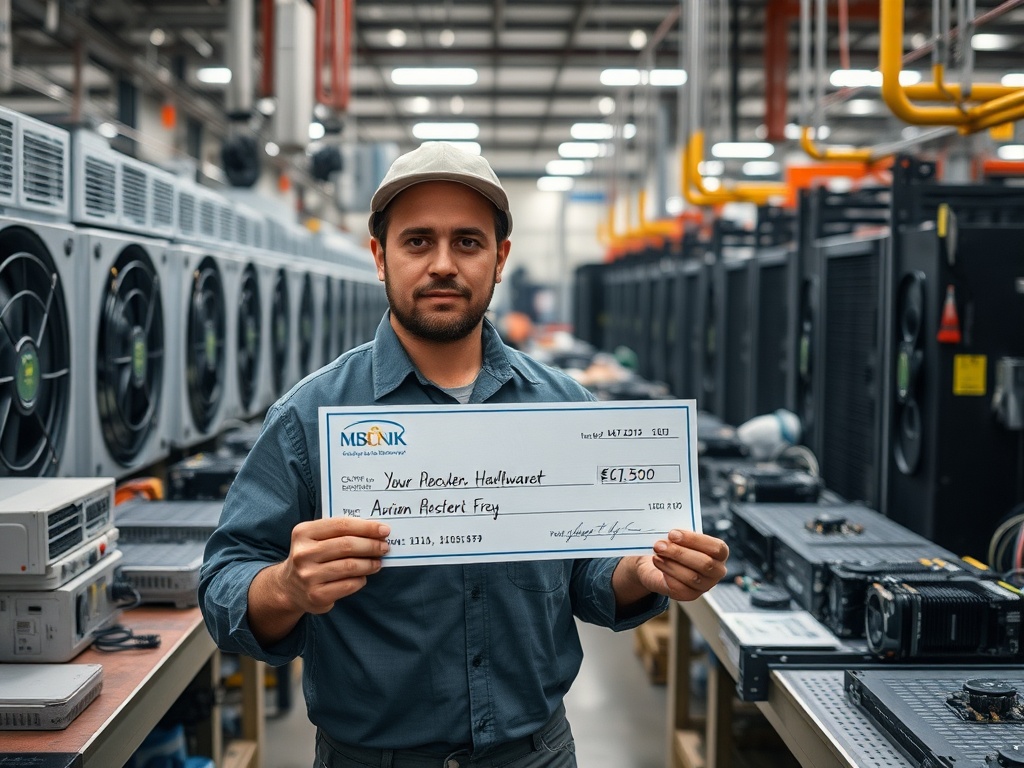
When the investment firm KKR completed the sale of CoolIT Systems, a Canadian manufacturer of cooling solutions for data centers, production employees, technicians, and frontline workers received checks averaging $240,000 each. Some cried, others were speechless. Nobody expected such a sum. They weren’t receiving a corporate end-of-year bonus; they were cashing out a real equity stake built over the years KKR controlled the company.
This isn't a story of generosity; it's a tale of incentive architecture with precise mathematics behind it.
The Mechanism Most Choose to Ignore
For years, KKR has operated an employee shared ownership program. In its application to CoolIT, this meant granting equity to workers at all levels of the organization, not just the executive team. The structure sounds simple in theory, though it is politically costly to implement: instead of concentrating the residual value of the sale into the pockets of fund partners and executives, a portion of the returns is distributed down the hierarchy.
The numerical impact is striking. If the average per employee was $240,000, and we assume a workforce of between 300 and 500 people (a typical scale for a manufacturer in this segment), the total value distributed among the workforce falls within the range of $72 to $120 million. This is real capital leaving the returns of the operation, flowing to those who operate machinery, manage inventory, and assemble components. It’s not a pension fund with deferred returns for decades; it's immediate liquidity generated by an exit event.
What makes this model structurally interesting is not the amount but the timing: the payment happens at the exit, meaning the employee's timeline aligns with the fund's timeline. Both have the same incentive: for the company to be worth more at the time of sale. This at least partially removes the classic tension between capital seeking long-term appreciation and labor demanding immediate compensation, often at the cost of operating margins.
Why the Model Isn't Replicated and What That Says About the Market
If the outcome is this favorable, the obvious question is why the vast majority of private equity operations do not replicate this structure. The answer isn't ideological; it's about distribution mathematics and governance politics.
A standard private equity fund maximizes returns for its limited partners, typically pension funds, university endowments, and family offices. Every percentage point of return redistributed to employees is a percentage point that comes out of the performance reported to institutional investors. In an environment where funds compete for capital based on their track record, reducing distributable returns is politically costly, even if it’s strategically smart.
There’s a second quieter barrier: the administrative complexity of maintaining an equity ledger distributed among hundreds of non-executive employees. Base employee cap table management platforms aren’t cheap, and the regulatory compliance associated with issuing shares in private companies varies by jurisdiction. The implementation cost isn’t prohibitive for a fund the size of KKR but represents a real barrier for mid-sized operators.
The third factor is the most revealing from a risk analysis perspective: funds not implementing this structure implicitly assume that employee engagement can be managed with fixed compensation and organizational culture. In specialized manufacturing companies, where operational knowledge is distributed across the production floor rather than centralized in executive PowerPoints, that assumption bears a hidden cost that’s hard to quantify until it appears as employee turnover, loss of tacit knowledge, and declines in quality during post-acquisition integration processes.
CoolIT operates in a technically demanding segment: liquid cooling for high-density computing infrastructure, including data centers supporting artificial intelligence workloads. In this context, retaining the technician who has spent eight years calibrating fluid distribution systems is not just a human resources detail; it’s an operational advantage with a direct impact on margins and asset valuation.
What the CoolIT Structure Reveals About the Fragility of the Standard Model
This case is not a moral argument for profit-sharing. It's empirical evidence that certain incentive structures produce more robust assets, and more robust assets lead to better exits for all participants, including the fund.
The question any private equity operator with positions in technical manufacturing or specialized services should be asking is just how much value they're leaving on the table by not aligning their workforce's incentives with the fund's timeline. The cost of implementing expanded equity participation is not trivial, but the cost of not doing so is significant: it measures in turnover, erosion of operational knowledge, and exit multiples that fall short of their potential.
The standard model treats the frontline employee as a variable cost to optimize. CoolIT's model treated them as an appreciating asset. The difference doesn’t lie in management philosophy; it lies in the $240,000 checks that determined which of the two models produces better risk-adjusted returns.
Structurally, what KKR demonstrated with this operation is that distributing residual value down the hierarchy isn’t incompatible with generating competitive returns for the fund. In certain asset segments, it’s a necessary condition for producing them.