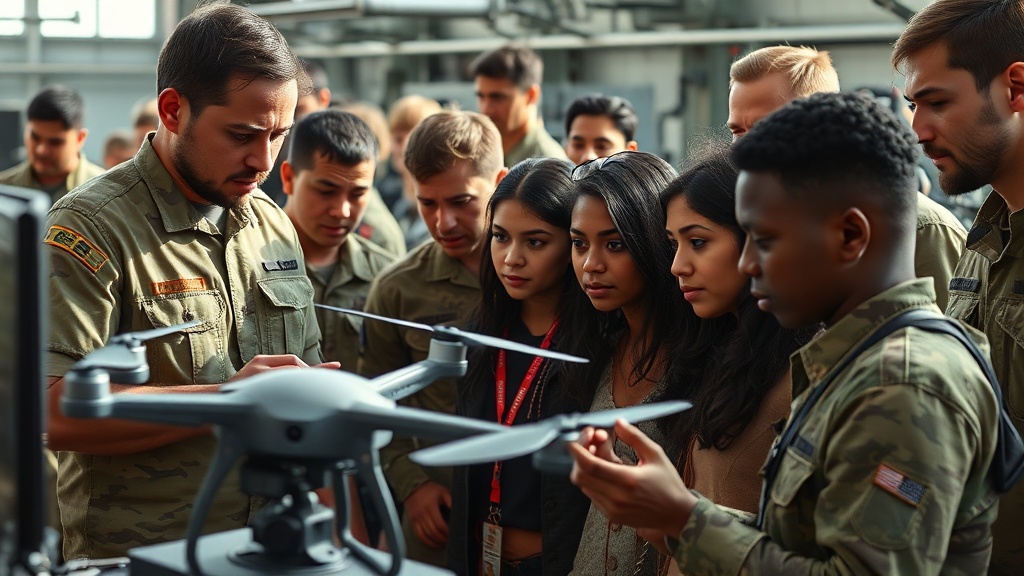

The Relentless Quest for Talent in the Drone Arena
The recent Best Drone Warfighter competition held by the U.S. Army has proven to be much more than just a technical event. On the surface, it seemed like any other military exercise, but in reality, it represented a profound effort to understand what truly composes an exceptional drone pilot. Amidst drastic technological transformations, the real challenge lies in identifying which human skills stand out in this highly automated environment.
The competition revealed that not all soldiers possess the necessary skills to operate a drone. Beyond mere technical handling, participants demonstrated that their backgrounds and skill sets transcend the standard. This event captured the human potential required to manage complex situations from a controlled and remote environment.
Beyond Technology: The Human Essence in Drone Command
Herein lies the heart of modern military strategy: merging human capabilities with cutting-edge technology. The Army evaluates not just manual dexterity or mental acuity, but a comprehensive understanding of the environment along with a sharp attention to detail. This establishes a new paradigm where knowledge of the terrain, rapid strategic decisions, and emotional intelligence play crucial roles.
The Army emphasizes its need for pilots capable of discerning the important from the trivial, making autonomous decisions based on ethical and strategic criteria. This competence also sheds light on how hierarchical systems identify and nurture talent, favoring horizontal skills and effective teamwork.
Unmasking and Building Culture
By closely examining this process, we can question how organizations, not just military ones, can apply these principles to their management and leadership. One major takeaway from the competition is that institutions must become talent hunters based on leadership skills rather than merely traditional abilities.
For companies outside the military sphere, this implies creating a culture that values each individual’s contribution to the overarching mission. It is essential to foster an organizational culture that empowers its members to act independently, grounded in high values. This is where true social capital lies.
Reflections for the Future of Leadership
The imminent challenge is: how to translate this model to conventional business management. Are we training our teams to respond creatively and decisively to the ever-changing market challenges? Talent retention hinges on how well our leaders are prepared to challenge the status quo, fostering an environment where innovation and ethics converge.
The Army's case invites us to consider: How does your company detect hidden talent within its ranks? Are your operations ready for decentralized and empowered leadership?
Finally, it prompts reflection: "What real work is the user hiring for here?" What competencies is the customer seeking in their interaction with the product or service we offer, and how can we adjust our strategies to effectively meet their genuine expectations and needs?