
The Twitter Trial Exposes Financial Risks of Speaking as if the Market Doesn't Exist
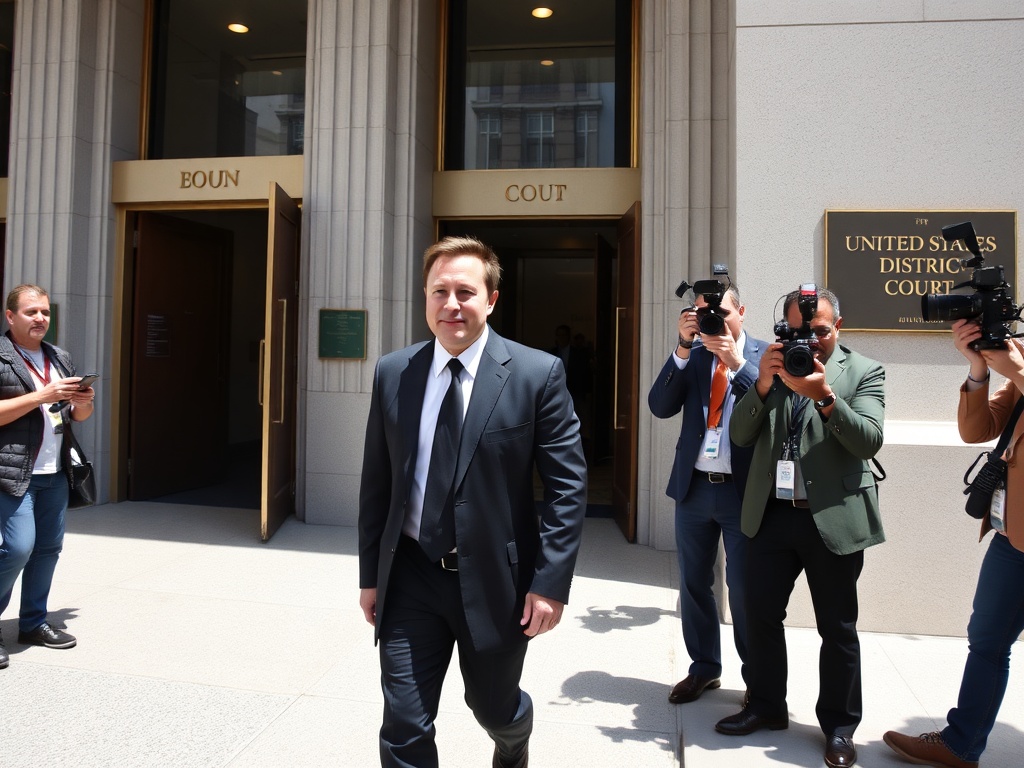
Elon Musk is set to testify in a federal trial in San Francisco concerning a class-action lawsuit from Twitter shareholders. The central accusation is operationally straightforward yet financially explosive: that false or misleading public statements may have artificially depressed the stock price before Musk finalized his $44 billion acquisition in October 2022 at $54.20 per share. The plaintiff class includes shareholders who sold their stocks between May 13 and October 4, 2022.
This case is not just another chapter in the corporate saga. It serves as a public audit, with rules of evidence governing a subject that many leaders still treat as "communication": the ability of an executive to alter market expectations through words, and the costs that arise when the asset is publicly traded and there exists an investor protection framework.
The legal discourse will determine if there were violations of federal securities laws. My focus here is the underlying business mechanism: what happens when “price” ceases to be a market reference and transforms into a tactically contested variable through messaging, leaks, and statements. In that environment, capital becomes costlier, execution slows down, and governance turns into a cash-flow problem.
Price as a Battleground: When Narrative Impacts the Cost of Capital
During the window covered by the lawsuit, the market found itself caught between two anchors: the agreed price of $54.20 and the volatility induced by public uncertainty surrounding the deal. The allegation claims Musk’s comments were “calculated” to cause the stock to fall. Regardless of the trial’s outcome, the mere fact that this is being litigated makes one point clear: price reflects not only fundamentals but also the credibility of the issuer and the prospective buyer.
In corporate finance, credibility is not some romantic intangible; it functions as either a discount or a premium. If the market assumes that the words of a player with influence over the deal's outcome are part of a strategy, it adjusts odds and discounts cash flows with increased uncertainty. That discount manifests as a short-term drop in price but also translates into a higher cost of capital within the deal ecosystem: more defensive banks, stricter covenants, and the necessity for additional collateral.
Moreover, the Twitter case had a structural component: the asset was on its way to becoming private. The acquisition closed on October 27, 2022, and the stock was delisted from the New York Stock Exchange on November 8, 2022. This move effectively removes the market's quarterly discipline but does not eliminate the cost incurred beforehand. During the acquisition phase, each message amplifies or destroys value because it affects closure probabilities and, hence, the implicit risk price.
What is crucial for a CFO or founder is the operational lesson: if you rely on the market or a regulated deal to execute a transaction, your communication is part of the internal control system. It’s not managed like marketing; it’s managed like financial risk.
The Mechanics of the Deal: Financing, Liquidity, and the Real Margin for Error
Musk's acquisition of Twitter was not a frictionless personal check. Financing and liquidity movements were documented throughout the period: Musk sold 7.92 million Tesla shares on August 10, 2022, for $6.9 billion to help fund the deal. Additionally, there was a $1 billion loan from SpaceX deposited in October 2022 and paid back with interest the following month.
These details matter because they reveal the true board: when closure relies on multiple sources of liquidity, the margin for maneuvering tightens. In such a context, any fall in target stock price, or any increase in uncertainty, rearranges negotiations with lenders and raises the implicit cost of completing the deal.
Furthermore, the process was not linear. Musk sought to terminate the deal on July 8, 2022, citing an alleged breach by Twitter regarding information on fake accounts. Twitter sued in Delaware on July 12, 2022, to enforce the agreement. Ultimately, Musk reversed his stance and announced on October 4, 2022, that he would proceed with the closure; on that day, shares rose by approximately 23%, according to the briefing.
From an execution angle, this scenario depicts a company operating with high coordination cost structures: lawyers, banks, advisors, internal teams, and a judicial calendar. Every public turn is not simply noise; it’s a cost. And when the transaction is anchored to a fixed price per share, the incentive to influence the prior market price exists, but the permitted space is minimal because the stock market is designed to punish asymmetrical information.
For leaders building companies with real sales and minimal fixed costs, this may sound distant. But it’s not. The pattern remains the same on a different scale: when your strategy depends on “telling a story” to sustain valuation or financing terms, your company is more exposed to a confidence event than to a product failure.
Governance and Litigation as Liabilities: The Cost of Operating without Institutional Friction
The class-action lawsuit in San Francisco differs from the Delaware case that sought to enforce the merger agreement. Here, the focus is on the preceding period and the alleged damage to shareholders who sold within a specific interval. That detail is crucial: the litigation does not challenge the fact of buying high or low, but rather the price formation process under a regime of disclosure and market rules.
In practice, the trial turns a leader's communication into evidentiary material. Legal teams will attempt to link statements to price movements and decisions made by investors who sold. It’s unnecessary to assume intentions to understand the impact: when your public channel becomes a volatility engine, your organization inherits a liability that consumes managerial attention and execution capacity.
Simultaneously, Twitter transitioned to private ownership under Musk and reoriented itself toward an "everything app" vision, including a rebranding. This shift has financial implications: being private reduces public scrutiny but does not eliminate financing needs. And when the owner is occupied in various fronts—Tesla, SpaceX, and other initiatives mentioned in the briefing—the market and financiers connect risks. Litigation becomes a variable that weighs heavily on the confidence of the entire system.
Here lies a management point that many underestimate: governance is not a document; it's a set of operational limits. In companies heavily dependent on a single figure, these limits become more valuable, not less. If they do not exist or are ignored, costs manifest as litigation, executive turnover, declining revenues, or rising debt. None of these costs are offset by visibility.
The Takeaway for Private Capital and Operating Companies: Less Narrative, More Control
This trial serves as a signal to two audiences. The first is capital: the era of "transformational purchases" is alive, but the market demands traceability between statements and facts. Regulators and shareholders have strong incentives to pursue any patterns that resemble manipulation or deception, especially when the actor has a direct influence over the outcome.
The second audience is operators. A CEO who builds through sales, margins, and cost discipline understands that the most fragile asset is not the brand; it is the ability to execute without interruptions. Public communication, in regulated contexts, should be designed to reduce ambiguity, not to win rounds in public opinion.
What lies ahead in the case is procedural: testimony, cross-examination, closing arguments, verdict, and potential appeals. There also remains the latent risk of regulatory derivatives, although the briefing mentions this only as a historical possibility, not as an immediate fact.
The technical point left for any board of directors is clear: when strategy relies on shifting expectations in a public asset, the business incorporates a legal and financial risk that materializes in costs and constraints, not in headlines.