
Hormuz as Structural Risk Premium: The Day Markets Reevaluated Energy Fragility
At times, markets need a single failure point to remind them that globalization isn’t an idea but a logistics framework. The Strait of Hormuz—a 21-mile passage at Iran's southern border—once again took center stage after its closure by Iran following US and Israeli attacks on February 28, 2026, during Operation Epic Fury. The response was immediate and mathematical: when the choke point that channels around 20% of the world’s oil and a similar proportion of liquefied natural gas is declared off-limits, the price of risk ceases to be an abstraction.
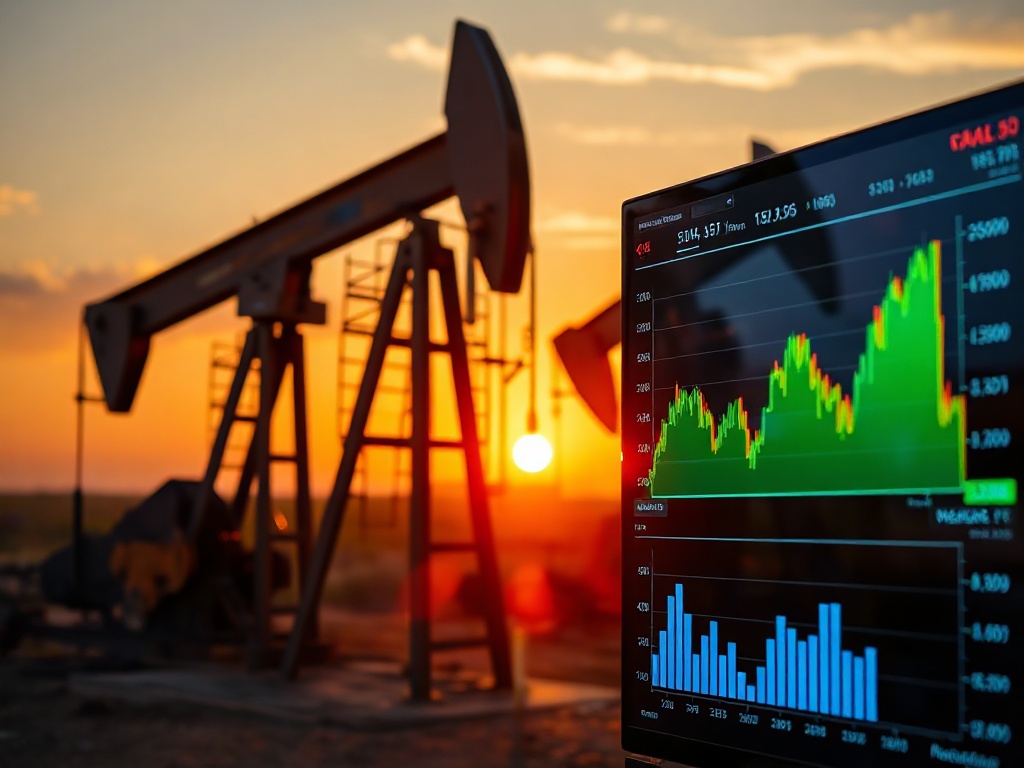
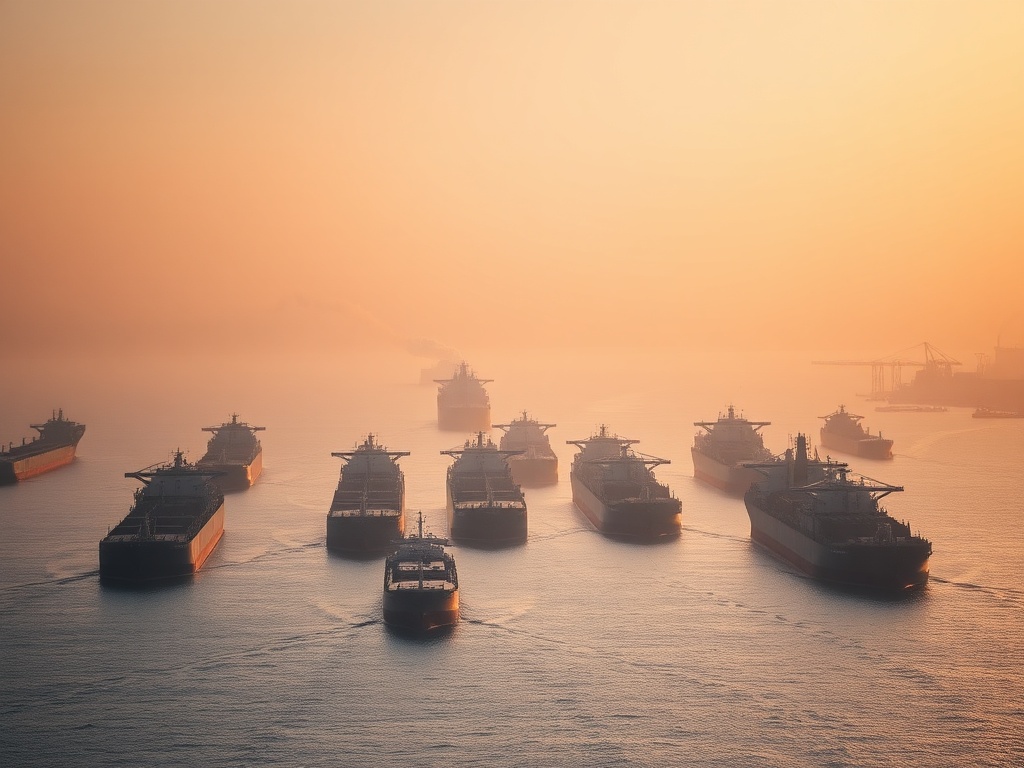
Disruption data piled up within hours. Between 150 and 250 vessels were anchored or stranded in the channel, including oil tankers and gas carriers. Brent increased by up to 13% at the opening on March 2, surpassing $82 per barrel. Meanwhile, the cost of moving crude in VLCCs jumped from levels near $60,000 per day to over $100,000, with reported peaks at $150,000 daily. A one-off freight from the Gulf Coast of the United States to China exceeded $17.3 million. Logistics faced physical setbacks as well: the port of Jebel Ali in Dubai suspended operations due to a fire linked to an “air interception”; Ras Tanura (Saudi Aramco) ceased activities after an attack; and Qatar—responsible for around 20% of global gas—temporarily halted LNG production due to attacks.
This series of events doesn't depict a volatility episode. It describes the price of living with an energy and trade system still organized around straits, terminals, and insurance policies.
The Shock Was Not Oil: It Was the Revaluation of the Route
When an index falls, the headline often looks for scapegoats in the collective nerve. In this case, the mechanism is colder: the closure of Hormuz forces a “reset” of risk appetite because it reconfigures what markets believe is stable. It’s not just about Iran exporting less; the crux is that the majority of Gulf crude must exit through this strait, even if the producer isn't Iran. The explicit threat of attacks on any ship attempting to cross transforms maritime transit into an equation where the marginal cost of an additional barrel includes a war premium, diversions, delays, and idle capacity.
The secondary effects are equally relevant. The congestion of 150–250 vessels means downtime, congestion, and a queue of uncertainty that spills over into supply contracts, inventories, and hedges. The operational halt at Jebel Ali adds a layer that markets tend to underestimate: while oil might be the headline, containerized trade is the connective tissue. If one of the busiest ports in the world stops, the potential impact leaps from energy to intermediate goods and consumption.
On the energy supply front, the closures and suspensions (Ras Tanura, Qatar) introduce a dangerous idea for macro balance: disruption ceases to be “just” logistics and enters the realm of damaged infrastructure. This nuance shifts the range of scenarios: it’s no longer enough to wait for a diplomatic announcement; there are physical assets needing security, inspection, and rebooting.
From there, Brent moving above $82 and freight rates soaring are not anomalies, but signals that the market is recalibrating the cost of operating in a landscape where routes can be closed, and terminals attacked.
Maritime Transport as an Amplifier: When Price is Set by Captive Capacity
Energy moves in molecules, but its price is increasingly defined by logistical capacity. The Hormuz episode exposed this reality: the tanker market, particularly VLCCs, reacted with a ferocity typical of a scarce resource. When daily freight jumps from $60,000 to $100,000–150,000, the value chain is reordered. Fleet owners profit; the refiner buying crude suffers; industries paying for energy suffer more; and central banks struggle to determine if inflation is transitory or here to stay.
Here, a point arises that many boards tend to treat as an operational detail. It isn’t. In a crisis, logistics isn’t merely “transport cost”; it’s access to supply. The news also introduces a structural factor: the control and consolidation of fleets by market-power actors (like the reported case of Synor backed by Mediterranean Shipping Company in the VLCC segment). In normal times, this concentration can be perceived as efficiency. In times of blockage, it becomes a price amplifier because capacity becomes bookable by few and the spot market dries up.
The financial consequence for corporations is direct: freight and insurance variability begins to act as a macro variable, not just a tactical one. For commodities and manufacturing, it means that the unit cost can fluctuate even if the base input price doesn’t. For net energy importers in Europe and Asia, the combination of higher crude and more expensive logistics operates as an external tax.
And there’s a second layer: the more expensive energy is to transport, the greater the temptation to prioritize alternative routes, increase strategic inventories, and sign long-term contracts. All of this immobilizes capital. In a world of rates and restrictions, this capital immobilization also represents risk.
The Network and Circularity: The End of the Linear Fantasy in Energy Chains
From my perspective, this episode fits a specific lens: The Network and Circularity, not as a slogan, but as an economic engineering diagnosis. Hormuz exposes the limit of the linear model: extracting at one point, transporting via a single corridor, refining elsewhere, consuming in a third, and assuming that the channel will always be available. That assumption is no longer an assumption; it’s a gamble.
In a well-designed network, value does not depend on a single link. In a linear chain, it does. The closure of a 21-mile strait managed to paralyze a massive fraction of global energy flow because too many economies built their security on a corridor they do not control. The hard data—20% of world oil passing through a single point—is not just an energy number; it’s a measure of risk concentration.
Circularity, here, does not mean recycling for virtue. It means closing operational cycles to depend less on external inputs and vulnerable routes. In energy and industry, the executive version of this idea translates into three concrete moves:
1) Diversify supply sources and routes as a part of business design, not just as a “contingency plan.” When a port like Jebel Ali stops, it’s understood that logistical redundancy is an asset.
2) Electrify and substitute where economically viable, because every unit of demand migrating from imported liquid fuels to locally-sourced electricity reduces exposure to maritime bottlenecks.
3) Reassess inventories with financial intelligence. The post-2020 world tried to revert to “just-in-time” as a dogma. Hormuz demonstrates that certain critical inputs demand a different logic, even at the expense of increasing working capital.
Simultaneously, the blow to Qatar and Ras Tanura confirms an uncomfortable truth: the risk isn't only in the route, but also in the node. Global energy chains behave like networks but are managed as if they were straight lines. This asymmetry is what punishes the market when a closure event occurs.
Inflation, Monetary Policy, and the Real Accounting of Geopolitical Risk
Markets often describe these events as “geopolitics.” For a CFO, it’s accounting: the shock translates into costs, margins EBITDA, strains covenants, and demands liquidity. For a central bank, it’s a dilemma: a Brent that jumps 13% and holds above $82 fuels inflationary expectations, just as there were already signals of pressure in input costs in the US, according to the analysis cited in sources.
This matters because energy shocks have a property: they not only elevate the price index; they redistribute power among sectors. Energy and transportation capture rent; discretionary consumption and manufacturing lose it. In equities, the adjustment tends to be a classic “risk-off,” but with one difference: if the market interprets that the blockage could prolong, the repricing is not limited to multiples; it extends into the margin projections for twelve to twenty-four months.
Moreover, this episode occurs on a board already strained by sanctions and flow restrictions: US pressure on crude imports from Russia to India and actions against Venezuelan tankers, as documented by Reuters in the briefing. This means that the system was already coming in with reduced elasticity. In a system with reduced elasticity, any blockage turns volatility into a trend.
The macro reading, then, is not simply that oil rose. It’s that the market decided to prepay a premium for logistical insecurity and infrastructure. And that premium spills over into everything: from the energy bill to the cost of capital.
The Mandate for Leaders: Design Redundancy as Profitability
This episode marks an operational shift that global leaders must treat as financial discipline, not as a crisis narrative. The global economy will continue to move through physical routes and concentrated nodes, but the price the market assigns to that concentration has already changed, and it won’t return to prior psychological levels while energy and logistics infrastructure remains exposed to closures and attacks.
The mandate for CEOs, CFOs, and investors is unequivocal: turn resilience into a line item on the P&L, with supply redundancy, viable technological substitution, well-calibrated insurances and hedges, and contracts that account for prolonged interruptions. In the decade opening in Hormuz 2026, surviving in energy, industry, and transport will demand designing robust and less linear networks because the risk premium has already settled in as a structural variable of global capitalism.