
Defeat as a Catalyst for Change
The recent clean sweep loss for Sri Lanka against England just days before the T20 World Cup 2026 has left many questioning the team's capabilities. However, coach R. Sridhar looks beyond the surface, aiming to transform this setback into a strategic opportunity. The real question isn’t whether the team can bounce back, but rather how innovation and technology, particularly artificial intelligence, can redefine cricket's future.
For a long time, cricket has been a sport driven by human skill and intuition, with teams employing tactics based on accumulated experience. However, in a context where data and augmented intelligence are emerging as key factors, what role can AI play?
A Data-Driven Strategic Approach
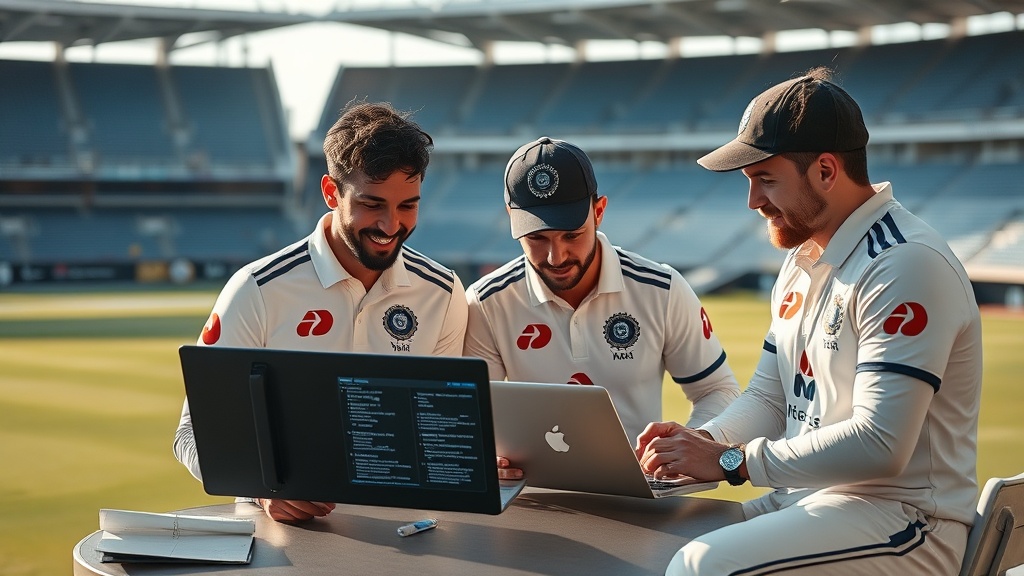
AI is not merely a "gadget"; it’s a powerful tool for in-depth analysis. Imagine a system capable of analyzing every player’s movement, predicting performance, and designing strategies in real-time. This not only elevates gameplay but also radically changes the preparation and execution of each match.
The analysis of large volumes of data allows the development of algorithms that suggest optimal player arrangement on the field based on the opponent, weather conditions, and other fluctuating factors. By not viewing the recent loss as an obstacle, Robert Sridhar may be hinting at just such a transformation: utilizing AI to turn weaknesses into strengths.
Transforming a Traditional Game
Cricket, like many industries, is not immune to the wave of digital transformation. Shifting from intuition-based tactics to data-driven strategies is a paradigm shift. This change not only transforms the game itself but also the sports organizations managing it.
Criticism often arises when discussing the automation of sports strategies, but the heart of the debate should be different. AI does not replace humans; it enhances them. In this sense, strategists like Sridhar can start leveraging these technologies to craft a strategy of co-creation between humans and machines, ultimately empowering each player with personalized analytics that once seemed like science fiction.
Towards a New Era of Sports
With participation in events like the T20 World Cup, cricket teams are exposed to fierce competition. Losing to England doesn’t have to be just a reminder of what went wrong; it can also be an invitation to envision what more can be achieved.
The capacity for AI to analyze and predict is only the beginning. When applied correctly, artificial intelligence can help answer even more complex questions: How should new talents be recruited? How can performance be maximized sustainably and ethically?
Human-machine collaboration is inevitable in 21st-century sports. This poses a direct challenge to sports leadership in Sri Lanka and beyond: Will they continue building strategies based on outdated methods or embrace the exponential capabilities offered by artificial intelligence?
Final Reflections
The T20 World Cup 2026 is not just another competition; it is a testing ground for emerging technology and sports trends. For teams like Sri Lanka, the challenge lies not only in winning games but in reassessing how the sport can incorporate innovation to reach new levels of competitiveness.
The key to success lies not in avoiding technological challenges but in how they are embraced to create a resilient and adaptable system. The question isn’t whether AI will improve cricket, but when and how these opportunities will materialize.
Is your organization ready to leave behind the heavy walls of the past and build open networks that collaborate with empowered individuals of the 21st century? This is a new game, and those who adapt will lead the next phase of cricket on a global scale.