
AI is Not Just Entering the Network: It’s Transforming It into a Factory
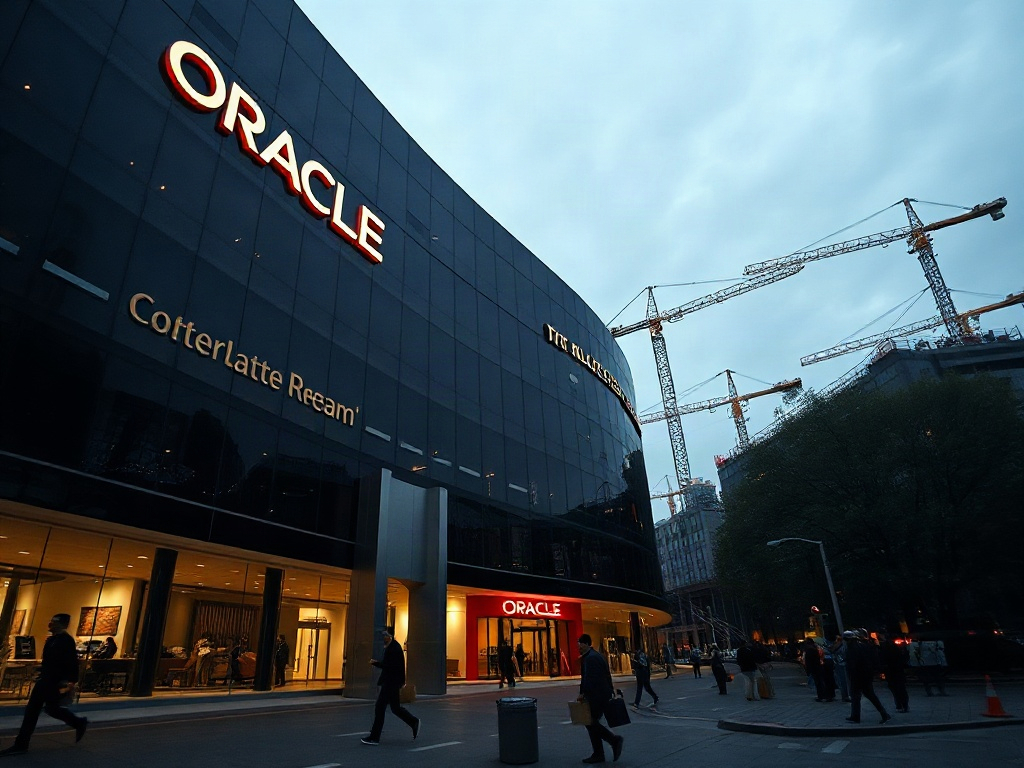
At Mobile World Congress 2026, Nokia chose to tell a story many executives find uncomfortable because it doesn’t fit the classic format of ‘more capacity, lower cost.’ Their announcement, backed by a strategic partnership with NVIDIA, does not revolve around a new radio or an abstract promise of 6G. Instead, it centers around something more complex: the real convergence between accelerated computing and the radio access network (RAN).
The facts are more compelling than the marketing. Nokia shared progress in deployments and functional trials of AI-RAN with operators such as T-Mobile U.S., Indosat Ooredoo Hutchison, and SoftBank Corp., in addition to adoption by BT, Elisa, NTT DOCOMO, and Vodafone Group of technologies driven by the NVIDIA AI Aerial platform. They introduced a component that anticipates how the network will be “designed” in the transition to 6G: a digital twin of the RAN built on NVIDIA Aerial Omniverse Digital Twin.
Behind the technical narrative lies an economic and political decision: NVIDIA is no longer “selling chips to telcos”; it is investing to change the sector's architecture. Nokia is not just “selling equipment”; it is attempting to dominate the layer where network productivity is determined. The figure that makes this irreversible is simple and brutal: NVIDIA made a $1 billion investment in equity in Nokia as part of the partnership announced in October 2025.
The True Product is No Longer Coverage, It's the Utilization of Computing
The telecom industry has trained for decades to optimize an art: converting immobilized capital into minutes, gigabytes, and availability. This discipline has created excellent organizations in engineering and procurement, but it has also made decision-making processes rigid. AI-RAN shifts that equation because its promise is not just to “automate” the network but to make RAN infrastructure behave like a computing platform.
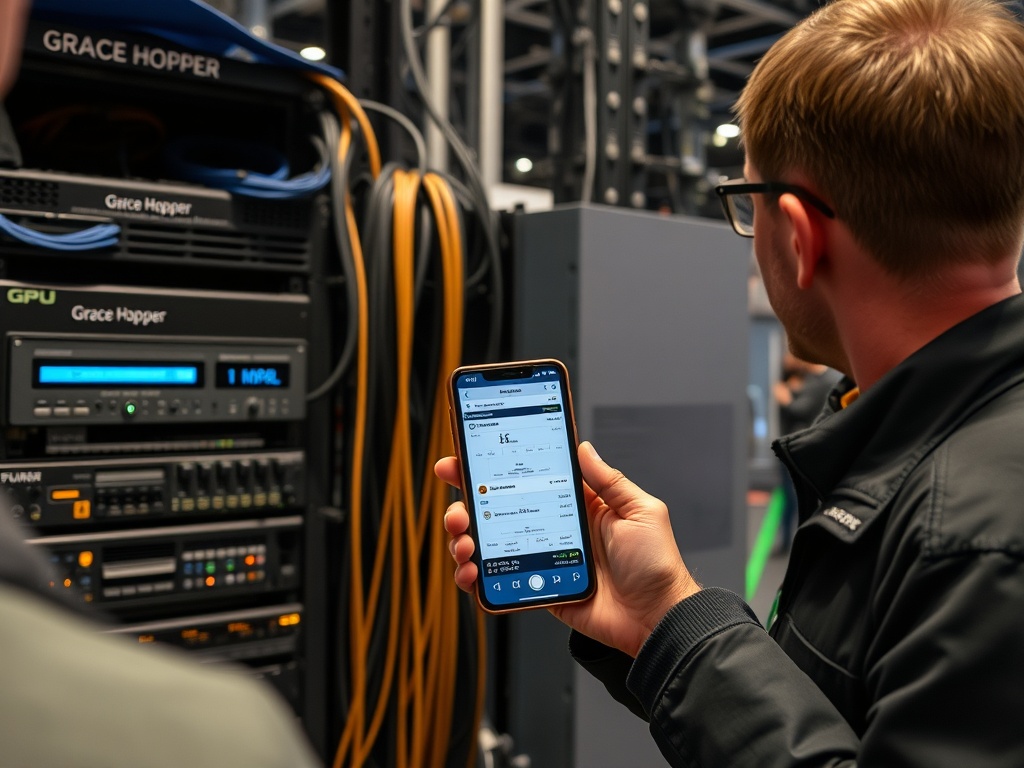
At MWC 2026, Nokia demonstrated with T-Mobile U.S. a showcase where AI loads and RAN workloads ran concurrently on the same NVIDIA Grace Hopper 200 server, in an over-the-air environment using real spectrum and commercial devices. The relevance is not the technological trick; it is the operational precedent: the network ceases to be an asset dedicated to a single function. At the CFO level, this shifts the conversation from CapEx by sector to the discussion of utilizing computational capacity.
The case of SoftBank Corp. pushes the edge even further: its demonstration integrated an orchestrator (AITRAS Orchestrator) to identify idle capacity and utilize it for third-party AI tasks. The implication is uncomfortable for traditional telecom management because it opens a dilemma of identity: if part of the “iron” of access can be monetized as computing, the company stops being just an operator and approaches a model of distributed computing provider.
The risk is not technical; it is governance. Many telcos are designed to defend stability and punish deviation. AI-RAN demands the opposite: a discipline of dynamic resource allocation, with controlled tolerance for experimentation and a clear chain of responsibility when critical services (RAN) coexist with “non-critical” loads (third-party AI). That’s where transformations die: not for lack of GPU, but for lack of explicit agreements on priorities, internal SLAs, and risk criteria.
Nokia and NVIDIA's Digital Twin Promises Speed, But Pays with Truth
Nokia announced the launch of the Nokia RAN Digital Twin, built on NVIDIA Aerial Omniverse Digital Twin, leveraging AI and ray tracing to simulate “physically accurate” propagation environments. The key phrase for the strategy is not “photorealistic”; it is that this approach aims to surpass simulators based on mathematical averages, especially in high bands that will be relevant in 6G.
According to reports, the digital twin ingests high-resolution 3D maps and material data to model how radio waves interact with the physical world. It also incorporates realism at the device level through collaboration with terminal manufacturers to capture specific hardware behaviors. In business terms, this aims at a direct lever: reducing the cost of making mistakes.
The operational promise is alluring: planning base station locations and optimizing beamforming of Massive MIMO before deploying, and even simulating complex scenarios like high-speed trains with Doppler effect modeling. But this kind of tool comes with a silent price: it forces organizations to accept evidence that contradicts historical intuitions.
The digital twin reduces the “concept-to-live cycle,” as Nokia stated, but it also reduces the space for internal self-deceit. If the model shows that an area requires a different topology, the comfort of holding plans due to political inertia ends. In real transformations, the friction is never in the software. It lies in the moment a committee must admit that last quarter’s plan is no longer defensible.
And there emerges a repeated pattern: organizations that talk most about agility are often the ones that punish error the most. A digital twin only accelerates an organization that is mature enough to treat its decisions as hypotheses, not as reputations.
The $1 Billion Investment is a Signal of Power, Not Enthusiasm
When NVIDIA invests $1 billion in equity in a provider like Nokia, it is not engaging in industrial philanthropy. It is purchasing strategic influence over the sector’s architectural path. And Nokia, by accepting it, is betting that the next differentiation will not only lie in radios but also in the capability to run mixed workloads and build a de facto standard around accelerated infrastructure.
The announcement of expanded AI-RAN infrastructure partners — with Quanta and SuperMicro joining Dell Technologies, and with Red Hat OpenShift as the orchestration layer — suggests a deliberate move towards components closer to COTS and cloud practices. This has two simultaneous readings.
First: it opens the door to efficiency and reduced dependence on proprietary hardware, with the potential for faster scaling and software updates. Second: it shifts the battleground toward integration, operation, and observability. Margin is no longer protected with “black box” solutions; it is protected with superior execution.
Meanwhile, the phrase attributed to Soma Velayutham, VP AI & Telecoms at NVIDIA, summarizes a thesis that rearranges budgets: “AI-Native 6G will be born in simulation, and digital twins will be essential to the train-simulate-deploy-optimize lifecycle.” Directive translation: the cost of developing 6G will shift towards simulation and training environments; the competitive advantage will be who learns faster with less physical deployment.
This pressures operators at a sensitive point: the relationship between spending and certainty. As simulation becomes the “birthplace” of the network, the company must decide how much capital to allocate to capabilities that are not visible in the traditional P&L of networks but determine the speed of future deployment.
Real Transformation Happens When the Executive Committee Stops Pretending Alignment
The demonstrations with T-Mobile, Indosat, and SoftBank confirm that AI-RAN has ceased to be a laboratory experiment and has entered the realm where narratives break: the territory of real operation, with commercial devices, live spectrum, and conflicting priorities. Indosat, for instance, showcased what it claimed was the first 5G Layer 3 call powered by AI RAN in Southeast Asia, on an open, cloud-native network with AirScale radios and software RAN accelerated by GPUs.
The industry can argue about timelines — Nokia and NVIDIA are aiming for broader commercial deployments by 2028 — but the relevant clock is another: the one measuring executive capacity to govern a hybrid infrastructure that mixes criticality with experimentation.
In my experience, the greatest hidden cost of these transformations is not the hardware purchase or software licensing. It is the accumulation of conversations not had among technology, finance, security, operations, and commercial divisions. AI-RAN forces the table to confront topics that many telcos have postponed for decades with elegant bureaucracy: who owns computational capacity, how it is prioritized, how it is monetized, what risks are accepted and which are not, and how performance is measured when the asset “network” also executes other things.
The typical C-Level trap is the comfort of discourse: declaring that the organization “is aligned” while each function defends its own incentive. AI-RAN punishes that theatrics because the convergence of workloads makes inconsistencies visible. If the network area protects availability at all costs, and the commercial area promises new AI services over idle capacity, the conflict already exists, even if no one names it. The only change is that it now breaks at a higher cost.
Maturity is not measured by adopting GPUs or digital twins, but by the capacity to turn tensions into operable agreements, with clear responsibilities and boundaries. The culture of any organization is merely the natural result of pursuing an authentic purpose, or the inevitable symptom of all the hard conversations the leader’s ego does not permit them to have.