
30,000 Drones a Year for Less Than $600,000: The Financial Architecture Behind Terra Industries
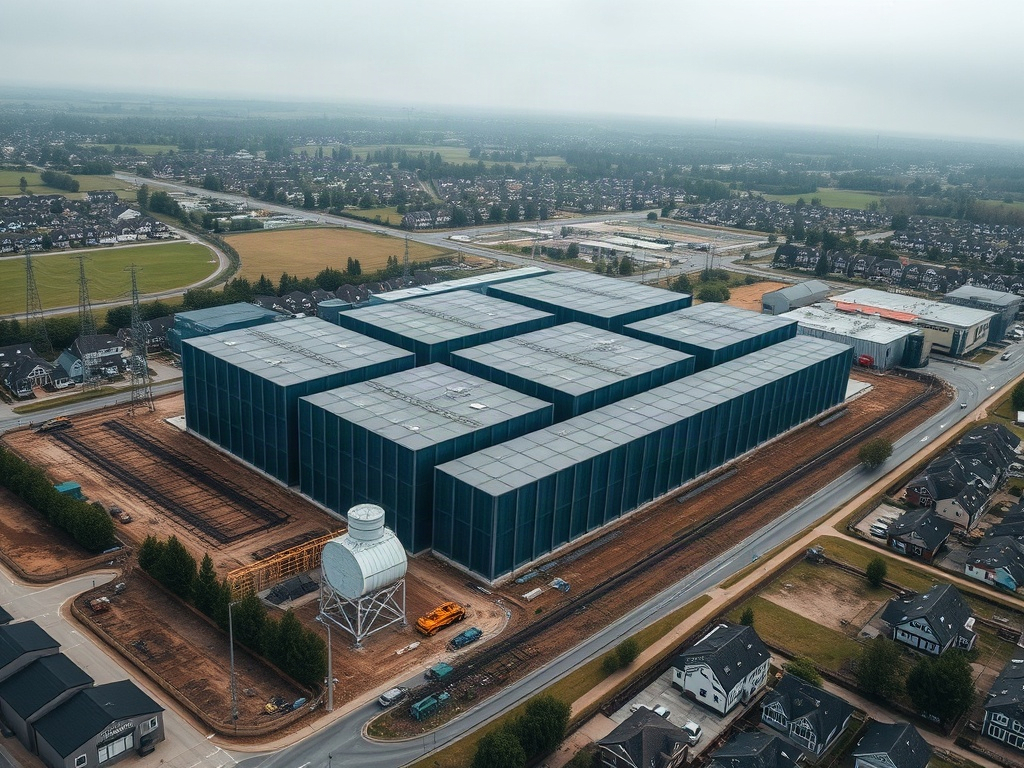
In February 2025, a 1,400-square-meter factory opened its doors on the outskirts of Abuja, Nigeria. Inside, two co-founders, aged 22 and 23, launched what is now described as the largest drone manufacturing plant on the African continent. Installed capacity: 30,000 units per year. Total external funding raised to date: less than $600,000. Revenues generated: $1.9 million.
That ratio—over three dollars of revenue for every dollar raised—is no minor detail. It is the backbone of the entire analysis that follows.
Terra Industries is not a story of successful fundraising nor a valuation inflated by rounds of venture capital. It is a case of financial architecture built from the first contract, not from the first term sheet.
Vertical Integration as a Pricing Mechanism, Not a Philosophy
The comparison with Apple that the company itself uses is helpful, but incomplete if it remains superficial. Apple adopted vertical integration to capture margins and control the user experience. Terra Industries adopts it for a more immediate reason: to reduce the hardware unit cost in a market where that cost is a barrier to entry.
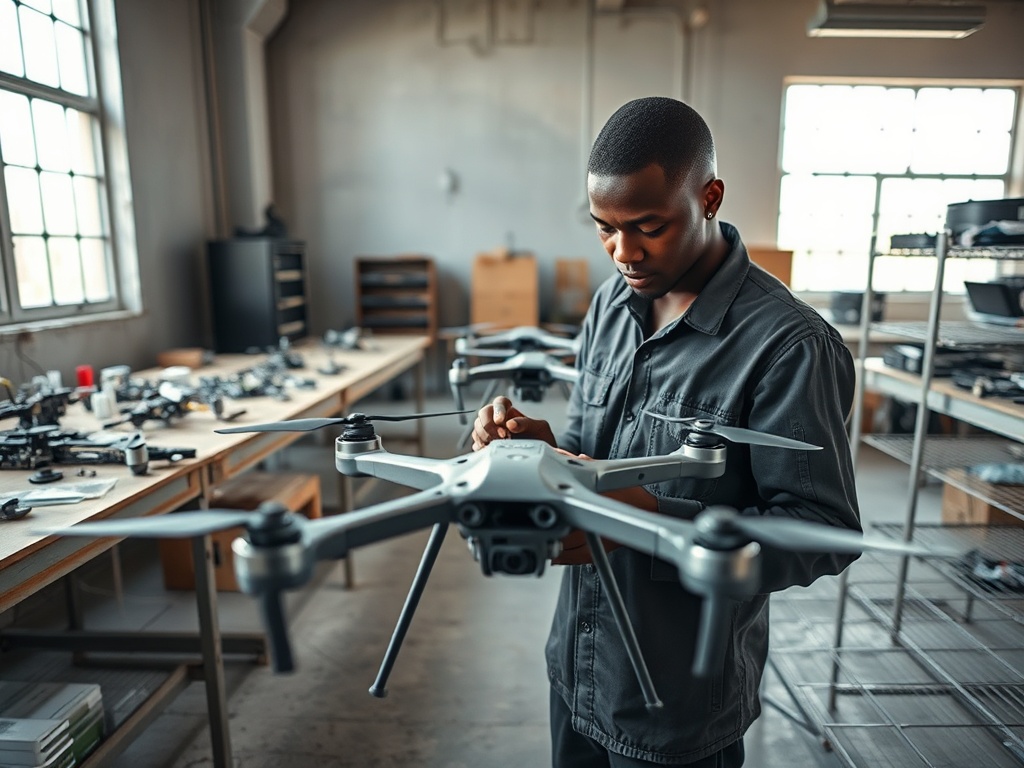
Manufacturing in-house fuselages, propellers, lithium-ion battery packs, and the ArtemisOS operating system allows Terra to cut hardware prices by up to 55% compared to international competitors. This is not a positioning advantage; it is the necessary condition for their subsequent subscription model to work.
Here’s the concrete mechanism: the customer pays less for the hardware because Terra absorbs the margin that would normally be captured by an external manufacturer. This initial price reduction lowers the friction of adoption. Once the drone is installed, the customer enters an annual subscription cycle for ArtemisOS. If the subscription is not renewed, the hardware stops functioning. The drone is not an independent asset; it is a node of a service.
This turns each deployed unit into a recurring contract with an automatic execution clause. There’s no renewal negotiation. There's no repeated sales cycle. The exit cost for the customer is the total loss of their surveillance infrastructure. That’s operational leverage, not customer loyalty based on convenience.
The question that arises is not whether the model is elegant—it is—but whether the promise of 30,000 drones annually can be maintained with the current capital base and without compromising the quality of the product that makes the retention mechanism work.
The $1.2 Million NetHawk Contract Reveals the Model's Ceiling and Floor
The contract signed in May 2026 with NetHawk Solutions—a private security firm—to deploy drones equipped with AI and surveillance towers at two hydroelectric plants in Nigeria is valued at $1.2 million. Out of a revenue base of $1.9 million, this single contract represents over 60% of the company's known total turnover.
This indicates two simultaneous things. First, that the model has concrete market validation: a paying client, with critical assets at stake, decided that Terra’s offering is robust enough to protect infrastructure that generates electricity. Second, the concentration of revenue in a few large contracts introduces structural fragility that the narrative of 30,000 drones per year tends to obscure.
A company that protects $11 billion in assets spread across eight African countries and Canada, but operates with less than $600,000 in external capital, is running an execution risk that is not in the product itself: it lies in the logistics of after-sales support. Keeping ArtemisOS updates operational in areas with intermittent connectivity, managing hardware failures in lithium mines in countries with complex logistics, and sustaining technical support cycles with a team that has yet to process the scale that its installed capacity promises are the risk vectors that the contract data alone does not resolve.
The subscription model with deactivatable hardware is brilliant in markets with stable financial infrastructure. In economies where private security budgets can freeze due to currency crises or changes in government, the same mechanics can become a reputational liability: clients with inoperable drones, critical assets unprotected, and contracts in dispute.
Data Sovereignty as a Business Argument, Not a Political Statement
Terra Industries’ partnership with PipeOps—a local cloud platform—to ensure that surveillance data remains in Africa is not an ideological gesture. It is a sales decision with technical backing.
Terra's clients protect oil refineries, gold mines, lithium plants, and power plants. These assets generate operational data, threat patterns, and infrastructure vulnerabilities that, if processed on servers outside the continent, create regulatory and competitive intelligence exposure. CEO Nathan Nwachukwu’s statement—"We must keep data in the hands of Africans"— articulates an argument that their corporate clients are already making internally in their own risk committees.
Importing sensors and cameras from South Korea while keeping data processing on local infrastructure is a deliberate partitioning of the value chain: the perception hardware comes from where quality justifies, while the intelligence and storage layer remains under African jurisdiction. This separation not only reduces the risk of information leakage but gives Terra a differentiation argument that international suppliers, by definition, cannot replicate.
The long-term risk in this dimension is the reliance on PipeOps as a critical link in the value proposition. If that platform faces issues with scalability or availability as Terra deploys thousands of additional units, the argument for data sovereignty—which today is an advantage—could become an operational bottleneck.
The Pattern Found by the 23-Year-Old Founders Before the Funds
What Terra Industries demonstrates in its current financial state is that sequence matters more than capital. They built manufacturing capacity before seeking institutional clients but designed the retention mechanism—the subscription with hardware deactivation—before scaling production. This inverts the usual order for venture-funded startups, where scaling comes first and then searching for positive unit economics.
With $1.9 million in revenue on less than $600,000 in external capital, Terra is not subsidizing its growth with investors; it is financing it with customers. That distinction defines what type of company it is and what kind of pressures it will face in the next 24 months.
The ceiling of opportunity is real: Africa has critical infrastructure that needs surveillance and lacks local providers with the scale to serve it at a competitive price. The floor of risk is also concrete: sustaining 30,000 annual units with consistent quality, operational support in complex markets, and a team that has yet to demonstrate management capability at that scale is an execution gamble, not a technology one. The technology is already validated. The organization behind it has yet to be tested.